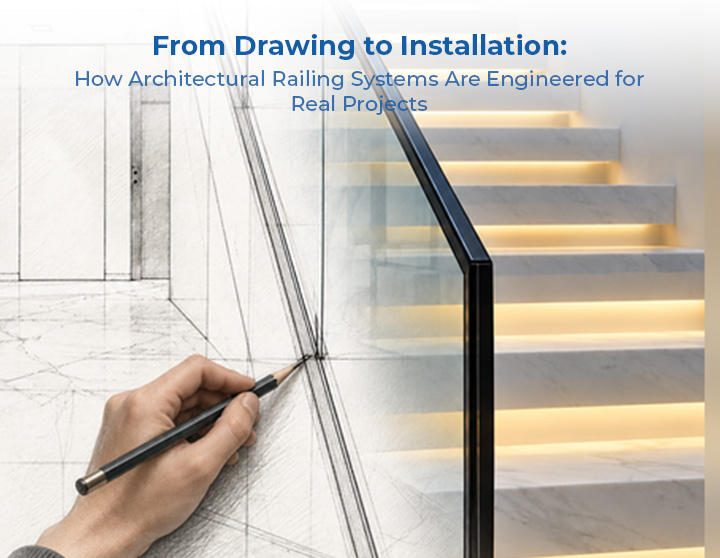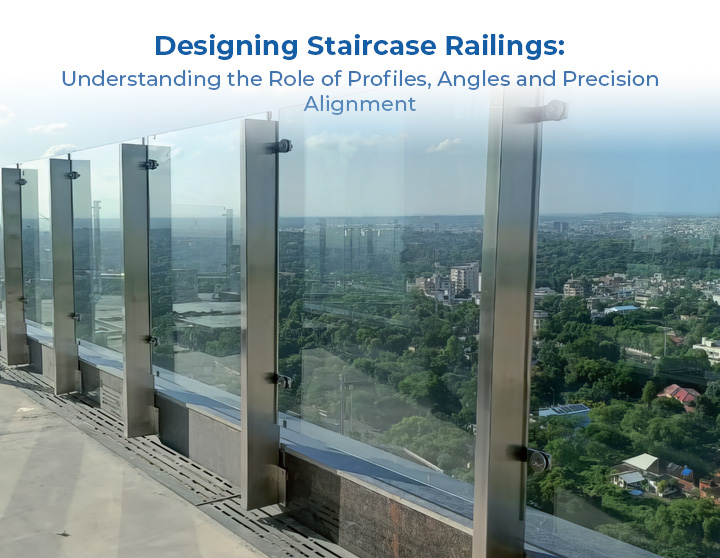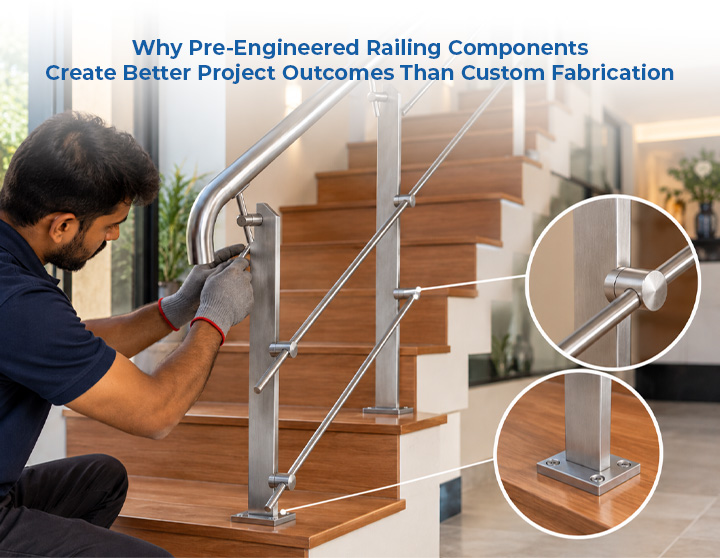
Frameless glass railings have become a defining feature of contemporary architecture. Their ability to create openness, transparency, and uninterrupted views makes them a preferred choice for premium residential, commercial, and hospitality projects.
However, the minimal appearance of a frameless glass railing system is achieved through detailed engineering. Behind the clean visual design are carefully designed channels, profiles, fixing systems, and glass integration methods that work together to deliver both aesthetics and performance.
The Structure Behind a Frameless Appearance
A frameless glass railing system creates the illusion of a floating glass barrier by reducing visible structural elements. However, the system still requires strong support and precise engineering.
The hidden framework plays a critical role in maintaining glass stability, alignment, and long-term performance.
The challenge is to create a system where engineering remains strong while the visual appearance stays minimal.
The Role of Aluminium Channels
Aluminium channels act as the foundation of many frameless glass railing systems. These channels securely hold the glass panels while maintaining accurate positioning.
Their design influences the stability, alignment, and overall appearance of the railing system.
A well-engineered channel system allows the glass to appear seamless while providing the required structural support.
Importance of Profile Design
Profiles are designed to manage strength, load distribution, and installation requirements. Their geometry, dimensions, and internal structure determine how effectively the system performs.
In premium architectural applications, profiles must achieve the right balance between structural reliability and visual elegance.
This allows architects to create clean designs without adding unnecessary visual weight.
Precision in Glass Integration
Glass integration requires careful coordination between glass panels, channels, profiles, and fixing components.
Accurate positioning ensures consistent spacing, smooth alignment, and a refined final appearance.
Even minor installation variations can affect the visual continuity of a frameless glass railing. Therefore, precision plays an important role throughout the process.
Designed for Different Architectural Applications
Frameless glass railing systems adapt easily and work across multiple spaces.
Builders commonly integrate frameless glass railing systems into balconies, terraces, staircases, hotels, villas, commercial buildings, and premium architectural developments.
Their transparent design helps maintain openness while supporting modern architectural concepts.
Combining Design and Performance
A frameless glass railing system must achieve more than visual appeal. It must provide reliable support, durability, and long-term performance.
This requires quality components, accurate engineering, and professional installation.
Consequently, these elements yield a railing system that appears effortless and rests on advanced design principles.
Conclusion
The elegance of frameless glass railings comes from the engineering behind the design. Channels, profiles, and glass integration systems work together to create a seamless appearance while maintaining structural reliability.
Technoraill develops modular glass railing solutions engineered for modern architecture. With precision-designed components, premium finishes, glass compatibility, and technical project support, Technoraill creates railing systems where minimal design meets dependable performance.
For spaces that demand transparency without compromise, Technoraill delivers frameless glass railing systems built with precision.