A railing project may look simple after completion. However, behind every clean railing line there is planning, coordination, engineering, and careful execution.
From the first design idea to the final installation, every stage affects the quality of the result. Therefore, understanding the railing installation process helps architects, builders, and homeowners make better decisions.
A good railing system should not only fit the space. It should also support safety, durability, aesthetics, and long-term performance.
Understanding the Project Requirement
Every railing project begins with understanding the site requirement. The project team must know where the railing will be installed and how the space will be used.
A staircase, balcony, terrace, atrium, walkway, or commercial passage will each have different requirements. For example, a terrace railing may need stronger weather resistance, while an indoor staircase railing may need more visual refinement.
This first stage helps define the right system, design direction, installation method, and material approach.
Design Consultation and Planning
Once the requirement is understood, the design planning stage begins. Here, architects and project teams decide the look, height, profile, finish, configuration, and glass compatibility where required.
Good railing design must balance safety and aesthetics. It should match the architecture while providing reliable support.
Design consultation is important because it prevents wrong selection. It also helps the railing system become a natural part of the project rather than an afterthought.
Technical Evaluation
After design planning, technical evaluation becomes important. This includes checking dimensions, fixing methods, site conditions, structural requirements, and installation possibilities.
A railing system must be practical for the site. If the design looks good but does not suit the actual conditions, problems may occur during installation.
Technical evaluation helps avoid such issues. It ensures that the selected railing system can be installed safely and accurately.
Customization Based on Space
Modern railing projects often require customization. Different spaces may need different profiles, finishes, colors, and installation styles.
Customizable railing systems allow project teams to select the right solution for each area. For example, one project may require glass-compatible balcony railings, structured staircase railings, and weather-resistant terrace railings.
This flexibility helps maintain a consistent design language while meeting functional needs.
Manufacturing with Precision
After the design and technical details are finalized, manufacturing begins. This stage requires accuracy because every component must match the approved specifications.
Precision manufacturing improves alignment, fitment, finishing, and installation quality. It also reduces site-level complications.
When railing components are manufactured properly, the final installation becomes smoother and more reliable.
Quality Checks Before Installation
Quality control is an important part of the railing installation process. Every component should be checked before it reaches the site.
These checks may include dimensions, surface finish, fitting accuracy, alignment, and overall quality. This ensures that only approved components move forward for installation.
Quality checks help reduce errors, rework, and delays at the project site.
Site Coordination
Installation requires coordination between different teams. Railing installation may need to align with flooring, glass work, civil work, painting, façade work, or interior finishing.
Therefore, proper coordination is necessary. It helps avoid damage, delays, and confusion during execution.
A planned installation process ensures that the railing system is installed at the right stage of the project.
Modular Installation Advantage
Modular railing systems make installation faster and cleaner. Since components are designed for assembly, the dependency on heavy on-site fabrication reduces.
A no-welding installation approach helps keep the site cleaner and improves finishing consistency. This is especially useful for premium projects where final appearance matters.
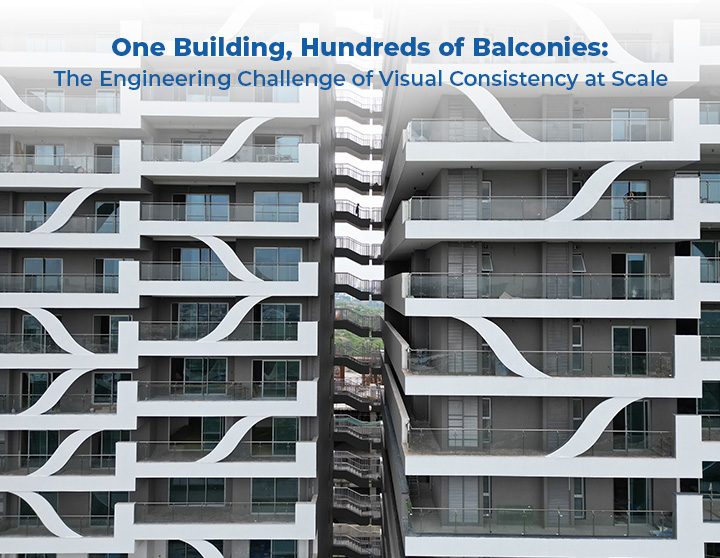
Modular systems also allow better repeatability across multiple areas of a project.
Final Inspection and Handover
After installation, final inspection is necessary. The team checks alignment, stability, finishing, glass fitment where applicable, and overall appearance.
This step ensures that the railing system meets the expected standards before handover.
Final inspection gives confidence to the client, architect, builder, and users.
Conclusion
A railing project comes together through multiple stages, including requirement understanding, design consultation, technical planning, customization, manufacturing, quality checks, installation, and final inspection.
Technoraill supports railing projects with a structured approach from concept to installation. With modular railing systems, precision engineering, premium finishes, glass compatibility, and installation support, Technoraill helps deliver railing solutions that are safe, elegant, and reliable.
For projects that require clean execution and long-term performance, Technoraill brings every stage of the railing installation process together with care and consistency.